17/04/2026 – Couture Craft at the Museum — auf Deutsch lesen
Talbot Runhof: 100 Couture Pieces
The exhibition at tim highlights how Talbot Runhof translate artistic influences into textile form, presenting over 100 couture pieces that reveal the designers' precision and structural clarity.
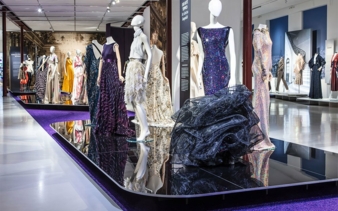
The exhibition at tim presents pieces from more than two dozen Paris shows, illustrating the design evolution of Talbot Runhof. © Bernhard Rampf tim | Staatliches Textil- und Industriemuseum Augsburg
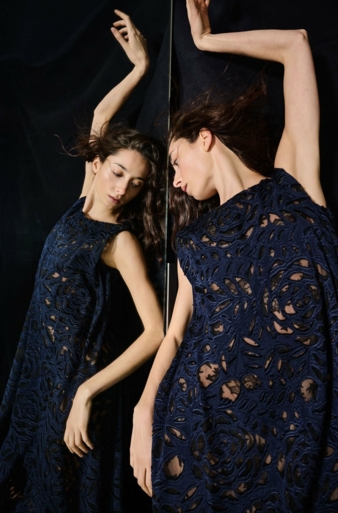
Selected couture dresses from 2006 to 2019 highlight the duo's distinctive design vocabulary. Shown here: the Viennese Opera Ball collection, Fall–Winter 2016/17. © Lauren Leis | Staatliches Textil- und Industriemuseum Augsburg
Textile Expression in a Museum Setting
The Staatliches Textil- und Industriemuseum Augsburg presents a special exhibition from 17 April to 25 October 2026, marking the first museum showing of work by Johnny Talbot and Adrian Runhof. More than 100 dresses from their Paris collections between 2006 and 2019 form the core of the retrospective. Shown outside the rapid rhythm of runway presentations, the pieces allow for a closer examination of how the designers develop structure, surface and silhouette.
Material Handling and Structural Precision
The exhibition highlights key elements of the duo's approach: refined draping, precise cutting and distinctive silhouettes. Strong colours, black-and-white contrasts and floral or graphic patterns shape the visual language. The presentation makes visible how textile surfaces are folded, tensioned or shaped into volume. As a result, visitors can trace material behaviour and structural decisions central to their couture work.
Creative References in Focus
The curatorial concept follows the sources of inspiration that the designers themselves describe. Music, film, art and social developments serve as points of orientation within their design process. In the exhibition, these references are presented as stages of creative thinking, helping to contextualise the dresses within a coherent framework.
Collection Context and Interpretation
In early 2026, the museum added the couture pieces from the Paris shows to its permanent collection. This step places the work of Talbot Runhof within a long-term cultural context. Museum director Karl Borromäus Murr associates fashion with sensuality, emotion and shared experience. The exhibition reflects this perspective by emphasising craftsmanship while allowing the aesthetic impact of the garments to unfold in a calm, focused setting.