18/03/2026 – Bio based, cellulose fiber solutions — auf Deutsch lesen
Lenzing highlights cellulose solutions in Brussels
At a high-level event in Brussels, Lenzing outlined how bio based, biodegradable cellulose solutions can strengthen Europes industrial resilience as policymakers consider updates to the Single Use Plastics Directive.
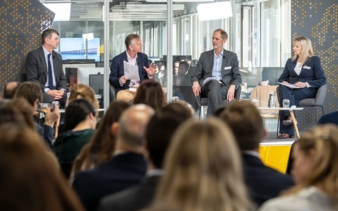
The discussion focused on fully bio based, biodegradable cellulosic fibers and their use in nonwoven applications such as wet wipes. © FTI Vonsulting Bruxelles
Senior representatives from the European Commission, the UK Mission to the EU, academia, civil society, and industry took part in the roundtable, which Lenzing organized in cooperation with Euractiv. Speakers included Aurel Ciobanu Dordea, Director for Competitive Circular Economy and Clean Industrial Policy at DG Environment, Dr. Daniel Bradley from the UK Mission to the EU, and Patricia A. Sargeant, Executive Vice President Nonwovens Commercial at Lenzing.
Cellulosic fibers in nonwovens
The discussion focused on fully bio based, biodegradable cellulosic fibers and their use in nonwoven applications such as wet wipes. Participants noted that Europe has the industrial foundation to scale these materials, while competitiveness is affected by global regulatory and cost asymmetries. Clear and coherent policy signals, including possible updates to the Single Use Plastics Directive, were identified as important for investment certainty and broader market uptake.
Georg Kasperkovitz, Member of the Management Board at Lenzing, underlined that bio based materials are already a practical, scalable reality and contribute to strengthening industrial resilience while supporting the shift away from fossil based synthetic fibers.
European production base
Lenzing operates major integrated pulp and fiber sites in Austria, Czechia, and the UK. These facilities support jobs, innovation and technological know how, reinforced by Europe based research and development activities. Sargeant emphasized the role of cellulosic fibers in single use hygiene products and their relevance in addressing SUPD concerns and microplastic pollution.
The companys specialty fibers are produced from renewable wood and offer lower greenhouse gas emissions compared to generic alternatives. They are certified biodegradable and compostable, with climate targets aligned to the 1.5 degree pathway and validated by the Science Based Targets initiative.
Outlook
Lenzing stated that climate ambition and industrial competitiveness can reinforce each other, and that it will continue working with policymakers and industry partners to advance a resilient, fossil free materials economy.