09/04/2026 – Techtextil 2026 — auf Deutsch lesen
Gebrüder Otto demonstrate versatility
Textile processors can now also turn to Gebrüder Otto for expert support in developing specialised technical applications.
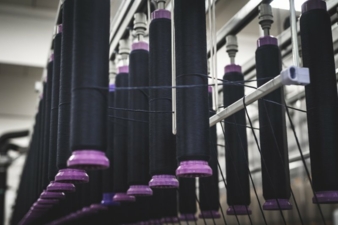
Aramid fibres place high demands on the spinning process: the combination of extreme tensile strength and low elasticity requires the highest level of precision in processing. © Gebr. Otto
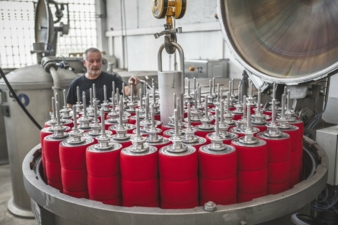
In the state-of-the-art dyeing facility, vibrant yarns are produced. © Gebr. Otto
In the production of technical yarns, especially aramids, the Dietenheim spinning mill now has a decade of experience. New, however, is a hygiene department where yarns for medical and hygiene products are currently being manufactured. In the future, this department could also produce textile products for the food sector.
Ongoing developments
Gebr. Otto has recently completed the development of “Eco Yarn”, a joint project between the Recycling Atelier Augsburg of the Institute for Textile Technology Augsburg (ITA), Augsburg University of Applied Sciences, and the industry partners Schwob and Weseta. The project team succeeded in breaking down discarded rental textiles into their fibres, processing them, and spinning them into a new yarn blended with 70 percent virgin cotton. Currently “in progress” is, among others, the Innocell project with the German Institutes of Textile and Fiber Research (DITF).
Cotton remains the flagship
Alongside innovative technical approaches, cotton remains the central focus at Gebr. Otto. Since last spring, the spinning mill has been offering cotton yarns certified with the EUCOTTON label. The fibres originate from Greece and Spain and stand for short, transparent supply chains within Europe.
Another example of the company’s commitment to regional value chains is the project “Lokalstoffmacher”. It is often assumed that regional products are automatically more expensive. But if you factor in transport, customs duties, taxes, and the greater planning reliability, the price difference often becomes much smaller. The project partners Edelweiss Jersey, Textilveredlung Keller, and Gebr. Otto can imagine extending their collaboration to yarns beyond cotton.
Combination with hemp
Gebr. Otto is also working on a yarn made from organic cotton and native hemp grown in Germany. The regionally cultivated winter hemp is processed by a project partner and then spun together with cotton or TENCEL. Hemp requires significantly less water to grow compared to cotton and is therefore considered particularly resource-friendly. Through a special processing method, the fibres can be treated so that they can be spun together with cotton.
Techtextil: Joint stand of BW-i, Booth D81, Hall 12.1.