
25.09.26 – Messe Frankfurt
100,000+ visitors at Intertextile
Intertextile Shanghai Apparel Fabrics – Autumn Edition 2026 brought together over 3,500 exhibitors from 30 countries and regions across 240,000 sqm in Shanghai. The show was structured around four themes: Fashion Forward, Performance Textiles, Sustainability, and Textile Future.
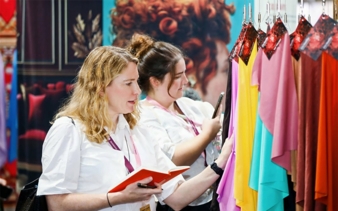
Under Fashion Forward, exhibitors presented seasonal collections, creative material concepts, and design-led solutions that supported buyers’ planning for upcoming product development. © Messe Frankfurt / Intertextile Shanghai Apparel Fabrics
Four themes as a buyer map
Sourcing at large fairs can be expansive fast. For the organiser, the Autumn Edition 2026 in Shanghai was about keeping that search practical: textile innovation was presented as “widely applicable, scalable solutions”, across a broad supplier field. Over three days at the National Exhibition and Convention Center (Shanghai), the show welcomed over 100,000 visitors and hosted more than 3,500 exhibitors from 30 countries and regions.
The fair’s structure followed four themes: Fashion Forward, Performance Textiles, Sustainability, and Textile Future. Messe Frankfurt linked these pillars to buyer discussions and to the way sourcing decisions blend creativity, technical performance, environmental responsibility, and digital capability. Messe Frankfurt notes that these pillars do not act in isolation but often combine across product categories.
Performance Textiles: closer to testing and use cases
One visible upgrade sat within Performance Textiles: the Functional Lab gained a more application-driven setup. Its expanded display area, The CUBE, bundled sample showcases with product presentations and testing demonstrations, including waterproof testing, down proof testing, and down inspection applications. On the wider floor, functional fabric suppliers organised their offering around use cases: thermal regulation, sustainability plus comfort, moisture management, and protection.
Sustainability: materials, processes, standards
Sustainability was headlined by the Econogy Hub, while responsible material and process innovations were also placed across the fairground. The organiser highlighted bio-based and recycled materials, lower-impact production, traceability tools, and alternatives to virgin petroleum-based products. Standards work also featured on-site: “We are preparing to launch the Global Responsible Textile Standard (GRTS), which will expand our scope to include responsibly produced fibres such as lyocell, animal fibres, silk, wool and recycled synthetics,” said Mr Rahul Bhajekar, Managing Director of Global Standards.
Textile Future: digital tools move into sourcing talks
Textile Future was reflected through the Innovation & Digital Solutions Zone, covering AI-supported workflows, digital product development tools, and production management. “China is a vital market for our business, and we are developing new AI-enabled capacities for local factories,” said Mr Himanshu Mehrotra, Managing Director of Coats Digital, adding that many visitors showed strong interest and requested follow-up presentations.
International participation remained a core part of the show’s positioning, with the organiser naming new exhibiting countries and regions in 2026 versus 2025, including Côte d’Ivoire, Egypt, Malaysia, Nigeria, Norway, Sweden, and Thailand.