15/01/2026 – Interview with Michael Waupotitsch, Vice President Textile Recycling at Andritz AG — auf Deutsch lesen
How fashion brands conserve valuable resources
With decades of experience in textile recycling, the Andritz Group possesses the expertise and cutting-edge solutions needed to unlock the enormous potential of resource recovery. Michael Waupotitsch, Vice President Textile Recycling at Andritz AG, explains how moving away from raw material waste works in practice.
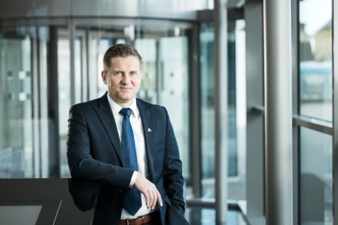
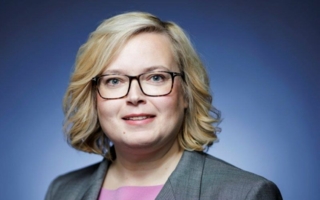
Michael Waupotitsch, Vice President Textile Recycling. © Andritz AG
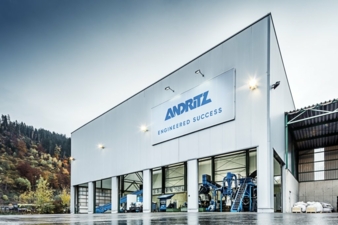
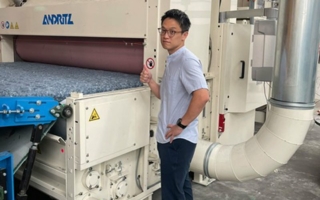
At the ART Center in St. Michael, Austria, Andritz AG offers companies the opportunity to conduct recycling trials on an industrial scale. © Andritz AG
textile network: Mr. Waupotitsch, currently only 12% of the 92 million tons of global textile waste is recycled, and less than 1% is processed into new clothing. Where do you see the biggest technological and economic hurdles to widespread textile recycling, and how does Andritz address them concretely?
Michael Waupotitsch: From a technical perspective, materials pose multiple challenges: used textiles are a broad, heterogeneous mixture. The textiles are made from different types of fabrics and typically consist of multiple types of fibers. Synthetic fibers such as polyester, polyamide, or elastane are as prevalent as natural fibers like wool or cotton, as well as artificially produced cellulose fibers. These fiber types often appear in blends within a single garment, such as the widely used polycotton—a blend of polyester and cotton.
Economically, the incentives for widespread implementation of textile recycling are still insufficient. Andritz offers a range of solutions and partnerships that cover the entire value chain of textile recycling—from fiber recovery for new yarn production to the automated sorting of used textiles, preparation of textile fibers for further processing, and innovative solutions for both mechanical and chemical recycling to establish a circular economy.
textile network: Blended fabrics are considered a particular challenge in recycling. You were recently awarded an engineering contract by Circ for a large-scale plant that, for the first time, will recover cotton and polyester from blended textile waste. Could you explain how this process works and the potential of this technology for the fashion industry?
Michael Waupotitsch: Circ’s innovative recycling process can break down polycotton textile waste into its original components—polyester and cotton. By reusing these materials, the demand for virgin raw materials will decrease. The breakdown of polycotton textile waste into original components is achieved through a process involving pressure and temperature, whereby polyester is dissolved and then separated from the remaining cellulose fibers. With our technology and expertise, we support Circ in taking their concept to an industrial level. In addition, Andritz brings extensive experience and expertise in cellulose fiber production and processing.
textile network: Andritz offers both mechanical and chemical textile recycling options. For which types of textile waste and applications is each approach most suitable? How do fashion brands decide which recycling path is right for them?
Michael Waupotitsch: It’s not possible to make a general statement about which approach is better—it depends on the input material and the intended outcome. Mechanical and chemical processes complement each other well to achieve the desired results. When it comes to blended fabrics composed of various fiber components, chemical recycling is necessary to separate them. Mechanical recycling is always the first choice—when applicable—because it is less complex. However, it doesn’t allow for the separation of individual components.
We offer innovative solutions for both methods, including a complete processing range of shredding systems for mechanical recycling, suitable for almost all types of textile waste. Thanks to our expertise in process engineering and plant construction, we are also a key player in chemical recycling, as we can utilize the same machine technology used in pulp production and paper recycling.
textile network: In your diverse pilot plants, such as the ART Center in St. Michael, Austria, companies can conduct recycling trials on an industrial scale. How important is this testing opportunity for firms looking to establish a circular economy?
Michael Waupotitsch: In addition to the ART Center you mentioned (focused on shredding technology), we also have pilot plants for mechanical recycling and automated sorting in France, as well as fiber technology test centers in Austria and the USA, where certain steps of chemical recycling can be demonstrated. These large-scale trials are about ensuring better planning for our customers and partners.
textile network: Looking to the future: Where do you see the textile recycling industry in five years? Which regulatory or market developments are needed for textile recycling to transition from a niche topic to an industrial standard?
Michael Waupotitsch: The EU has launched a "Strategy for Sustainable and Circular Textiles" that outlines proposals and ideas to increase recycling rates. Among these is extended producer responsibility, which has recently been adopted as a general principle. However, member states have until April 2028 to finalize its implementation. Other measures, such as mandatory recycling quotas or export bans on textile waste, are still in the discussion phase. Currently, the unclear timeline for the implementation of these regulatory frameworks within the EU remains a barrier.